
Compare platforms for file storage, digital preservation, application retirement and communications. Choose the one that fits the information you need to keep.
The best digital archiving software depends on your workload. Moving inactive project files off primary storage requires different capabilities from preserving historical collections, retiring an application or retaining employee communications.
This guide compares five options, explains where each fits and gives you practical questions to ask before committing to a platform.
Digital archiving software at a glance
| Software | Recommended fit | Main focus | Key question to investigate |
|---|---|---|---|
| ShareArchiver | Inactive business files and primary storage optimisation | Policy-based file archiving, search and transparent access | How will users access archived files from their existing folders? |
| Preservica | Records and collections that must remain usable over decades | Active digital preservation, metadata and discovery | How will the platform manage format obsolescence and preserve authenticity? |
| Archive360 | Governance across communications, content and enterprise data | Classification, retention, legal hold and controlled access | Which connectors and governance controls cover your actual sources? |
| OpenText Information Archive | Application retirement and mixed structured/unstructured data | Consolidation, retention and access to historical application information | Can you reconstruct useful records after the original application is retired? |
| Jatheon Cloud | Email, messaging and other business communications | Communications capture, retention, search and evidence export | Which channels, edits, attachments and metadata are captured? |
What does digital archiving software do?
Digital archiving software captures and organises digital content so it can be stored securely, retained under policy and retrieved when needed. These archiving solutions combine metadata, indexing, access control and audit trails around an archive repository.
Document management systems support everyday collaboration and active documents. Archival storage serves a different stage of the lifecycle: keeping business records usable after routine work ends. The benefits include less pressure on primary storage, quicker retrieval and better evidence for audit readiness.
You may also see it described as digital archive software or electronic archiving software. The label alone does not tell you which data sources it supports.
Digital preservation software adds a particular emphasis on long-term preservation: continued readability, authenticity and format management. Backup focuses on recovery after data loss or failure. An archive still needs its own protection and recovery plan.
For the fundamentals, read our guide to digital archiving systems.
How to compare digital archiving solutions
We organised the shortlist around five buying considerations:
-
Information type
Files, documents, communications, application data and preservation collections have different requirements.
-
Future access
Consider how employees, records managers and investigators will find and use archived information.
-
Policy controls
Compare retention, access rights, relevant holds and records of administrative actions.
-
Deployment and integration
Check supported sources, destinations and the responsibilities your team will retain.
-
Operating cost
Include migration, storage, access, administration and the ability to export your data later.
A useful shortlist should narrow your evaluation to products that solve your particular problem. Ask each vendor to demonstrate the relevant workflow with representative data.
1. ShareArchiver: for file archiving and storage optimisation
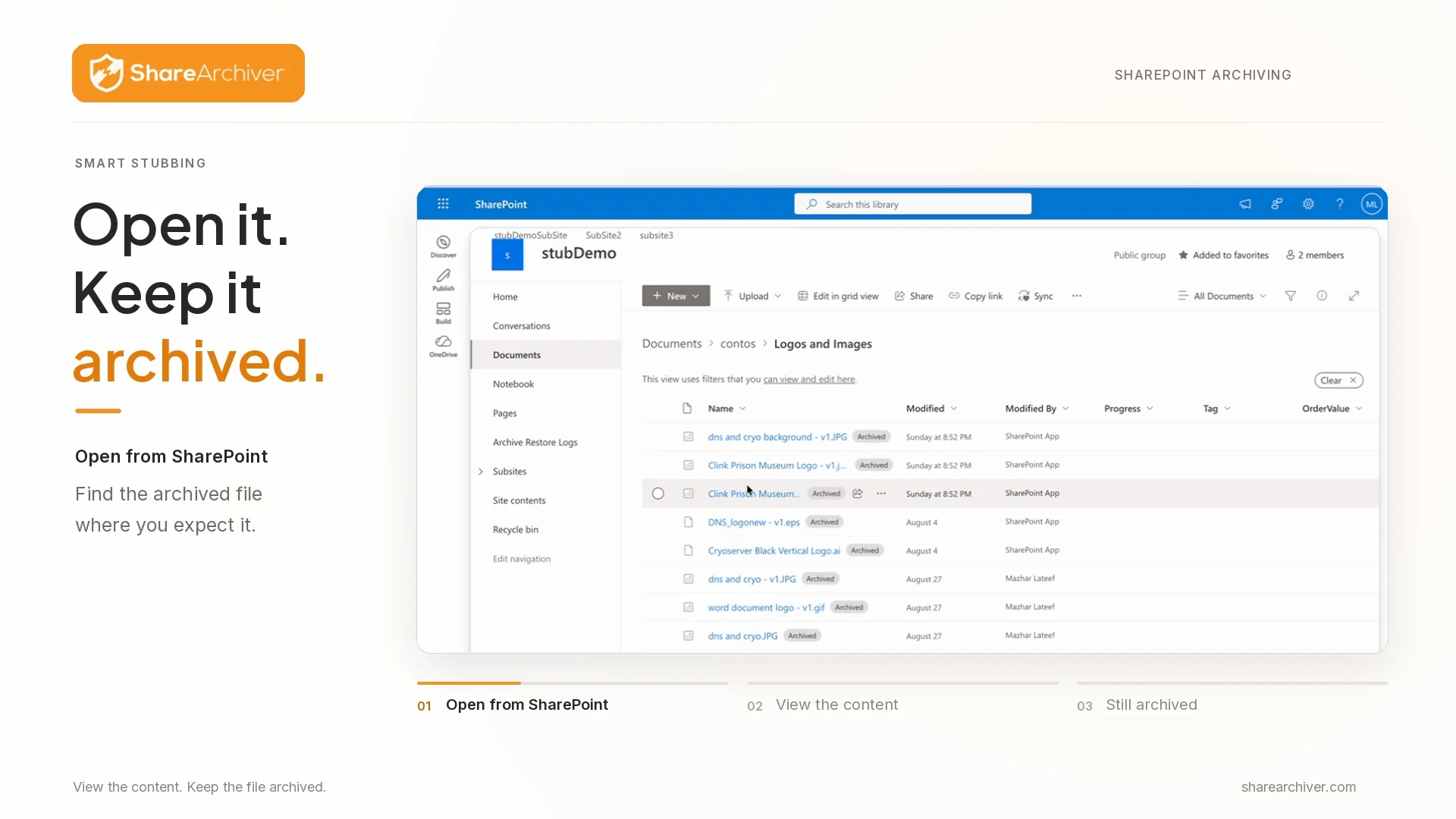
Recommended fit: IT teams that want to reclaim primary storage while keeping archived business files visible, searchable and accessible.
ShareArchiver’s archive storage solution moves inactive files to archive storage without making them disappear from the folders employees use every day. Its transparent stubbing technology preserves the original file structure, giving users a familiar route to their information while reducing the amount of data held on primary storage.
Keep files visible and accessible after archiving
When ShareArchiver archives a file, it leaves a lightweight stub in the original location. Employees can still see the file where they expect to find it.
Archived content remains searchable and viewable without first restoring it to primary storage. When a user opens a stubbed file, ShareArchiver handles retrieval automatically—there is no separate manual restore process for the user to manage.
For completed projects, historical contracts and other retained documents, that means IT can move inactive data off expensive storage while employees continue finding and accessing the information they need.
The data archiving software overview explains how stubbing connects storage savings with everyday file access.
Customer evidence behind the approach
In a published customer testimonial, ASHRAE reports a 65% reduction in file-server size, while retaining its file structure and maintaining users’ access to data. That illustrates the practical value of transparent archiving: recovering storage capacity while preserving familiar ways of working.
Capabilities to evaluate
Identify worthwhile savings: use unstructured data management to analyse file volumes, age and usage before setting policies.
Automate file archiving: move eligible inactive files into archive storage according to defined rules.
Preserve familiar access: keep files visible in their original folders through lightweight stubs.
Find and view retained information: search archived content and inspect documents without first restoring them to primary storage.
Choose your archive destination: evaluate local storage or ShareArchiver’s cloud archiving solution against your infrastructure and access requirements.
What to verify in a pilot
Follow representative files through the complete process: identify them, archive them, find them in their original folders, view their archived content and open them through their stubs.
Include large files, different permissions and applications that depend on existing file paths. Measure the storage recovered and the experience of accessing archived information under realistic network conditions.
The strongest demonstration is straightforward: show how much data leaves primary storage—and how easily users can still reach it.
2. Preservica: for active digital preservation
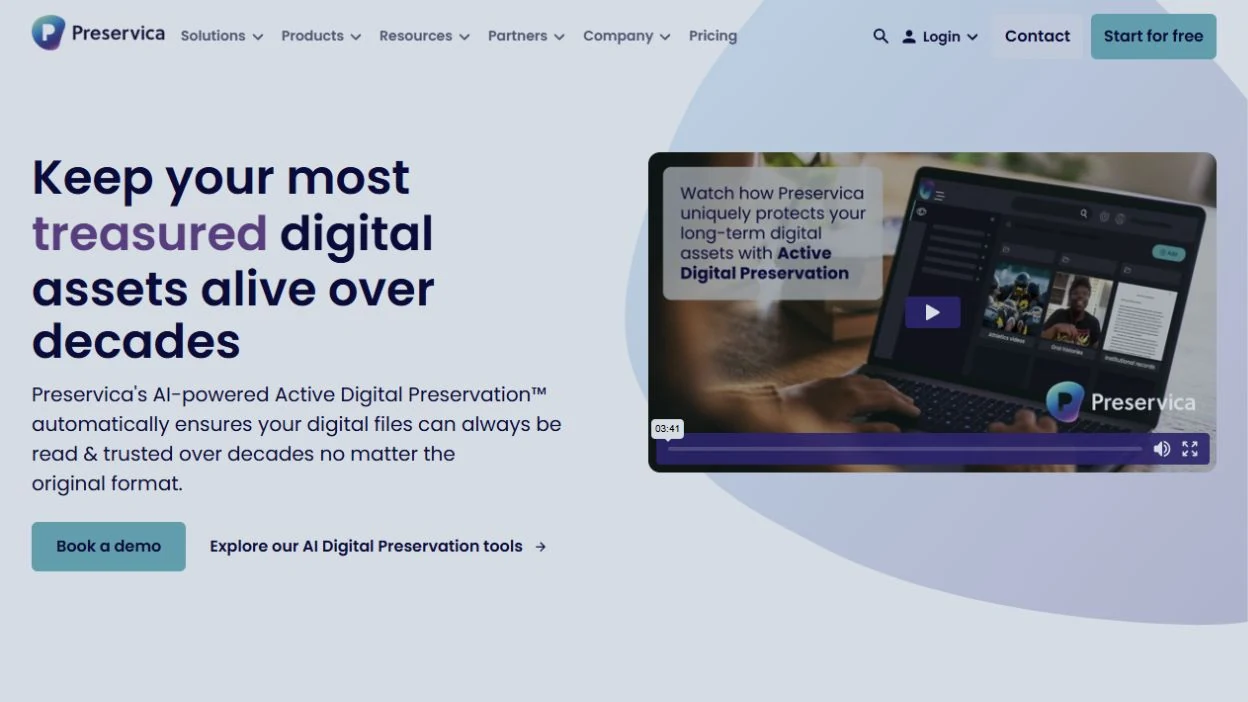
Recommended fit: Archives and organisations preserving records or collections whose continued readability matters over long periods.
Preservica focuses on Active Digital Preservation, including preservation actions, metadata management, access and discovery. Its published approach includes format transformation and checksums to support the authenticity and usability of digital assets.
It is worth evaluating when keeping the original bytes is insufficient. An engineering record, historical document or audiovisual collection may need ongoing preservation work as file formats and supporting applications change.
Capabilities to evaluate
Preservation actions that address file-format obsolescence.
Metadata and provenance for retained digital materials.
Discovery and access to preserved collections.
Microsoft 365 preservation through Preserve365, where relevant.
What to verify in a pilot
Use difficult formats, realistic metadata and the permissions your users need. Check which preservation actions are performed, how exceptions are reported and which capabilities belong to your chosen edition.
Preservica lists a free Starter option and paid editions. Evaluate capacity and feature limits before treating a free plan as a production solution for a business archive.
3. Archive360: for broader data governance
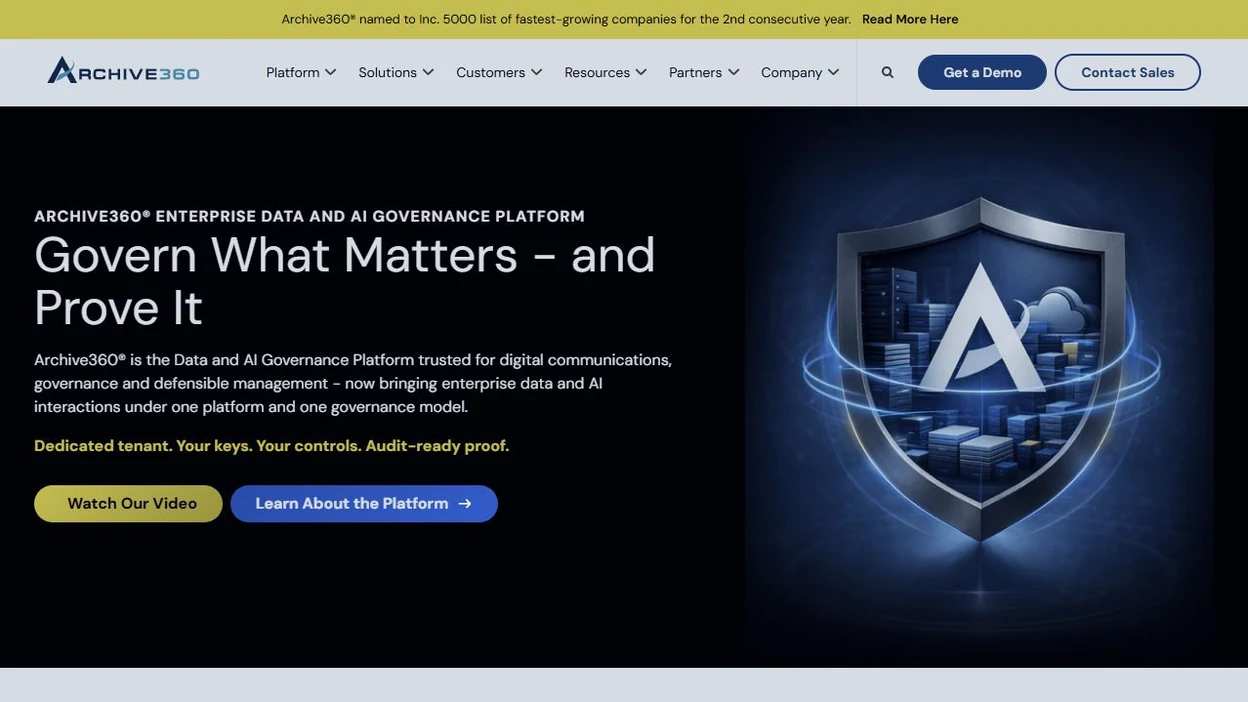
Recommended fit: Organisations that need consistent governance across several information sources.
Archive360 describes its current offering as an enterprise data and AI governance platform covering communications, content, application data and AI interactions. Its documented controls include classification, retention, legal hold, access permissions and audit trails.
This is a broader evaluation than moving inactive files into cheaper storage. The platform may be relevant where several departments need to manage retention and discovery under a shared governance model.
Capabilities to evaluate
Ingestion from supported connectors, APIs and data pipelines.
Metadata classification and policy-based retention.
Controlled search, export and investigation workflows.
Customer-dedicated tenant architecture and encryption controls.
Older material uses the Archive2Azure name; confirm the current product, deployment and contractual scope when evaluating an existing proposal.
What to verify in a pilot
Test each required source rather than assuming that broad platform coverage includes your configuration. Ask how records, permissions and metadata survive ingestion or migration. Clarify administration, key management and the modules included in the quote.
4. OpenText Information Archive: for application retirement
Recommended fit: Enterprises retaining historical application data while retiring or consolidating systems.
OpenText Information Archive supports structured and unstructured information, including records whose usefulness depends on relationships and business context. Its documented capabilities include centralised archiving, retention, legal holds, audit trails and search.
Application retirement is a distinct use case. You may need to retain historical transactions and their attachments while removing the cost of running the original application. Preserving searchable, understandable records is central to that decision.
Capabilities to evaluate
Archiving of structured data and associated content.
Search and access to historical records in context.
Retention management and hold controls.
Cloud, on-premises and hybrid deployment options.
The current product name is Information Archive; older pages and proposals may refer to InfoArchive.
What to verify in a pilot
Reconstruct representative records and their attachments, not just individual database rows. Test exports and the queries people will need after decommissioning. Scope data extraction, transformation and deployment work before estimating savings from retiring an application.
5. Jatheon Cloud: for communications archiving
Recommended fit: Organisations retaining email, messaging and collaboration records for discovery and oversight.
Jatheon Cloud is an AWS-based archiving platform for business communications. Jatheon documents capabilities covering email, social media, mobile messaging and collaboration content, alongside retention, permissions, legal hold, search and export.
The key evaluation is capture completeness: can the platform retain the communications and context your organisation actually needs to produce later?
Capabilities to evaluate
Capture from your required communication channels.
Search and export across retained communications.
Retention policies, legal holds and user permissions.
Investigation and records-request workflows.
What to verify in a pilot
Test conversation threads, attachments, edits and deletions for each supported channel. Confirm required licences, capture methods and historical migration. Evaluate message retention separately from any objective to reduce file-server storage: they are different workloads.
How to choose the right digital archive software
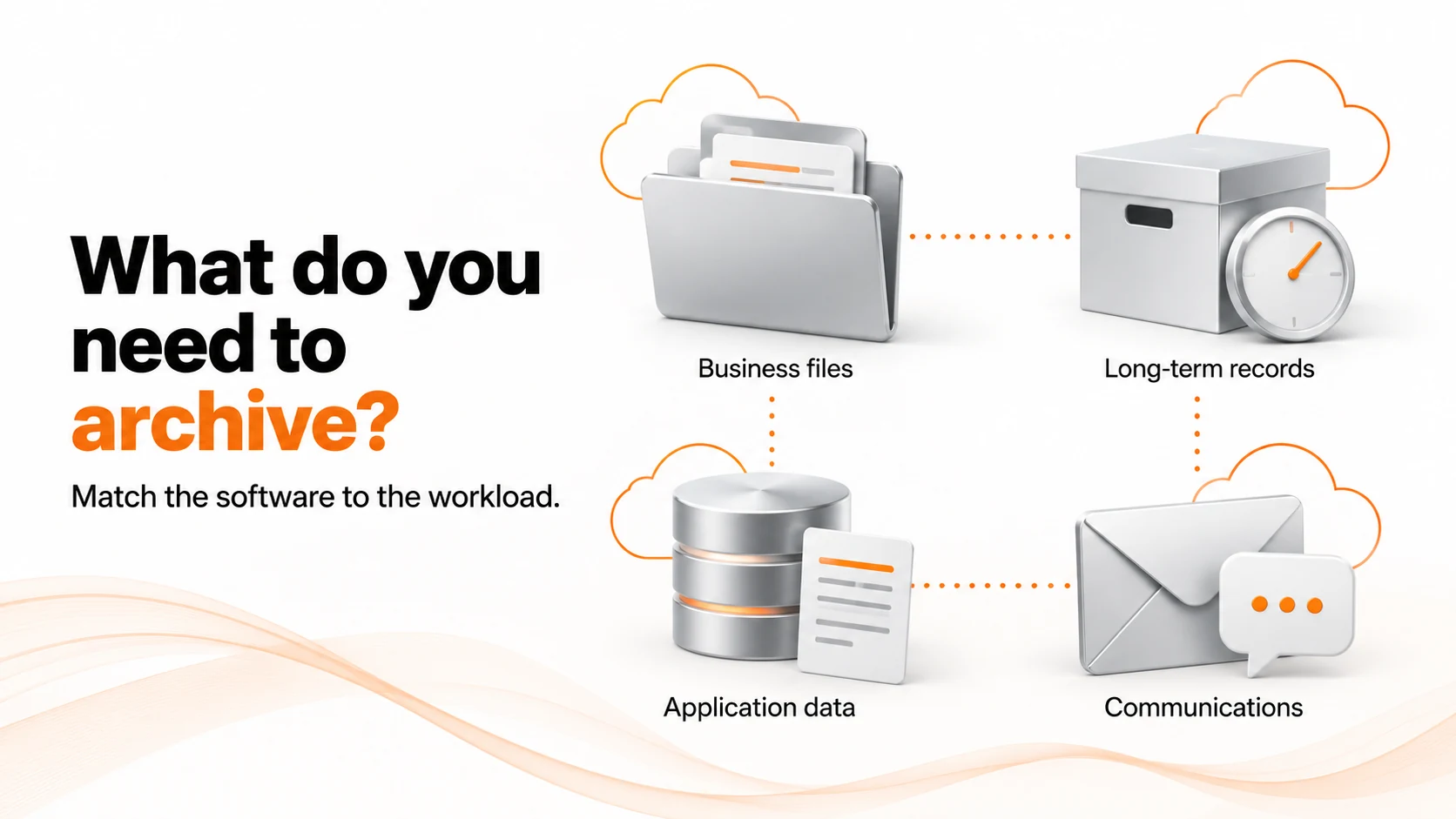
Identify digital content and legacy systems
Inventory source systems, data volumes, record categories and owners. Separate the primary problem from secondary requirements. A file-storage project should begin with capacity and the user experience; application retirement should begin with useful historical records from legacy systems.
For electronic document archiving, identify which metadata, permissions and original context need to survive. For communications, specify the channels and capture details. For preservation collections, include format risks and provenance.
Test archival storage, search and retrieval
Use the same test dataset for each shortlisted vendor. Ask the platform to ingest it, apply policies, locate selected records and export a usable result. Time both ingestion and retrieval using realistic volumes, networks and concurrent users. A fast demonstration with a few files does not prove performance at scale.
For scanned documents, ask whether optical character recognition makes the text searchable, or whether a separate scanning process is required. Include attachments, embedded objects and video where relevant. Check that metadata and relationships preserve the full context of each record.
| Evaluation area | Evidence to request |
|---|---|
| Source support | A successful import from your actual system and content types |
| Search and access | A user locating and opening an authorised record; an unauthorised user being blocked |
| Retention and holds | The rules applied to a record, an applicable hold and the approval process for disposal |
| Integrity and context | Preserved metadata, record relationships and checks that content transferred correctly |
| Recovery | A demonstrated restore after a realistic failure |
| Portability | An export containing the content and metadata needed to use it outside the platform |
Set retention periods for regulatory compliance
Archiving software can support compliance requirements through retention, access control and auditability. Its presence does not establish compliance by itself. A retention period should follow the applicable obligation and record category, rather than a blanket rule to keep everything forever.
In regulated environments, ask for documentation showing how records are stored, protected against unauthorised changes and held when disposal must stop. Test the approval process for deletion after the retention period ends. Compliance teams should be able to review policy changes and administrative actions without relying on undocumented assurances.
Healthcare, financial services and public sector organisations can face different regulatory obligations. Map the relevant regulations to specific controls with your records, security and legal teams. Ask vendors to demonstrate those controls in your configuration; a general compliance claim is not evidence that a particular obligation is met.
What should digital archiving software cost?
Digital archiving software should help you make better use of your storage budget while keeping business information accessible. The business case starts with how much inactive data you can move off primary storage—and what it costs to keep managing that data today.
ShareArchiver’s data archiving software uses volume-based pricing. Its policy-based archiving and transparent stubbing help organisations reclaim primary storage while keeping archived files visible and accessible to users.
To scope your requirements, consider:
The volume of inactive files eligible for archiving.
Your preferred local or cloud archive destination.
Expected data growth and retention requirements.
The file access, search and security controls your organisation needs.
A demonstration can turn those requirements into a practical evaluation. Use representative files to assess storage savings, policy behaviour and access through file stubs.
Book a free ShareArchiver demo to discuss your environment and request pricing tailored to your archiving needs.
Which option belongs on your shortlist?
Inactive business files: evaluate ShareArchiver’s policy-based archiving and user access.
Long-term readability and authenticity: evaluate Preservica’s preservation workflows.
Governance across information sources: evaluate Archive360’s platform and connectors.
Retiring applications: evaluate OpenText Information Archive’s handling of records and their context.
Communications retention: evaluate Jatheon Cloud’s capture and discovery capabilities.
Frequently asked questions
What is the best digital archiving software?
Choose according to the information being archived. File storage optimisation, digital preservation, communications capture and application retirement require different workflows. Shortlist suitable platforms and validate them with your own data.
Is there free digital archive software?
Preservica offers a free Starter option, with capacity and edition limits. Check whether any free plan supports the volumes, permissions, retention and recovery controls required for your use case.
Is digital preservation software the same as archiving software?
The capabilities overlap, but preservation software puts particular emphasis on continued usability, authenticity and format risks. General archiving tools may focus on storage, retention or discovery. Evaluate the required preservation actions explicitly.
Can electronic archiving software replace backup?
An archive supports retained information and future access. Backup supports recovery after loss or failure. The archive needs a protection and recovery strategy of its own.
Which archiving tool should I use for business documents?
Check source compatibility, searchable metadata, permissions, retention and convenient access. ShareArchiver is relevant for file and unstructured data archiving; other products address preservation, communications or application records.
How do I compare software with an archiving service?
Software supplies the platform. A managed archiving service may also operate migration, infrastructure or administration. Ask who performs each task, how access is handled and how records and metadata can be exported at the end of the agreement.